
Two Locations: Elgin & Buffalo Grove - Come in for a FREE trial class!
STUDENT RESOURCES
ORIGIN AND DEVELOPMENT
Approximately 1300 years ago, (during the 6th century A.D.) the Korean peninsula was divided into three kingdoms: Silla, Koguryo, and Baek Je. Silla, the smallest of these kingdoms, was constantly under invasion and harassment by its two more powerful northern and western neighbors.

Fig. 1. Ancient Map of Korea taken from The Encyclopedia of TaeKwon-Do, Vol 1. Gen. Choi Hong Hi
During the reign of Chin Heung, twenty-fourth King of Silla, the young aristocrats and warrior class formed an elite officer corps called Hwa Rang-Do. This warrior corps- in addition to the ordinary training in spear, bow, sword, and hook- also trained themselves by practicing mental and physical discipline, and various forms of hand and foot fighting.
To guide themselves and give purpose to their knighthood, they incorporated a five-point code of conduct set forth by their country’s greatest Buddhist monk and scholar, Won Kang:
-
Be Loyal to your king
-
Be Obedient to your parents
-
Be honorable to your friends
-
Never retreat in battle
-
Make a just kill
The Hwa rangdo became known in the peninsula for their courage and skill in battle, gaining respect from even their bitterest foes. The strength they derived from their respect to their code enabled them to attain feats of valor that became legendary. Many of these brave young warriors died on fields of battle in the threshold of their youth - as young as fourteen or fifteen years of age. Through their feats, however, they inspired the people of Silla to rise and unite. From the victories of Silla, the Korean peninsula became united for the first time in history.
It appears that the warriors of Hwa rangdo added a new dimension to this national art of foot fighting by gearing it to a combative art and infusing the principles of the Hwa rangdo. The new mental concept as well as physical elevated foot fighting to an art and it became Soo Bak-Gi.
The Silla and Koryo marked a flowering of the martial arts in Korea. Soon after, however, the dynasties acquired and anti-military posture. Though this began a period of civil enlightenment, anything dealing with the military was debased. By the end of the Yi Dynasty the martial arts appeared to have ceased existing. The final blow came with the Japanese occupation (1909-1945), when it was forbidden to practice any of the martial arts. Taek Kyon was secretly practiced by some dedicated stalwarts and passed on to a handful of students.
Proponents of the art. such as Song Duk Ki and Han Ⅱ Dong, managed to keep the art alive. With the liberation of Korea in 1945, the new Republic of Korea Armed Forces was organized on January 15, 1946. A young Second Lieutenant, Choi Hong Hi, recently released from a Japanese prison camp, began teaching his martial arts to some of his soldiers. The rest is history, resulting in what is today known throughout the world as TaeKwon-Do.
CHANG HON STYLE
PRACTICED BY THE INTERNATIONAL TAEKWON-DO FEDERATION (ITF)
The name TaeKwon-Do officially came to be in 1955 when General Choi Hong Hi submitted it to the Korean Naming Board for the newly formed martial art of Korea. As far back as 1300 years ago, martial arts were known to been practiced in Korea by the Hwa Rang-Do, a warrior class of young men formed to defend the smallest of the three kingdoms of Korea, the Silla. Another martial art practiced in Korea was Taekyon, the ancient art of foot fighting.
When Japan occupied Korea, many of the ancient Korean arts were forbidden and those, which were allowed, were of Japanese or Okinawa origin. When Korea was liberated after World War II, the nationalist feelings were to get rid of the Japanese and other foreign names in the Korean martial arts.
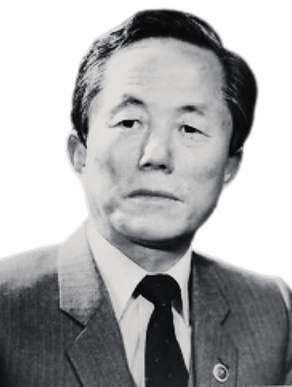
A young man named Choi Hong Hi had secretly practiced Taekyon underground with a Korean master while the Japanese forbade it. When Choi came of age his parents sent him to Japan, to Tokyo University to study calligraphy. While there, Choi earned a second-degree black belt in Japanese Karate, which chiefly emphasized hand techniques. When Choi returned to Korea, he joined the newly formed Republic or Korea Army as a second Lieutenant. By 1951 Choi was a Brigadier General of the R.O.K. Army. In 1954 General Choi combined his knowledge of Japanese hand techniques and Korean foot techniques to form his own martial art “Oh Do Kwan” (Gym of my way).
Then in 1955 a board of martial artists, historians, and prominent members of Korean society formed to give a new name to the Korean martial art to replace the old names of: Kwon Bup, Gong Soo, Dong Soo, Taekyon, etc. General Choi’s submission was TaeKwon-Do and was unanimously accepted by the board for its accurate description of the “art of hand and foot fighting” and its close resemblance to the ancient art of Taekyon. The Korean TaeKwon-Do Association was formed and General Choi Hong Hi was named president.
General Choi had the idea of spreading the art of TaeKwon-Do throughout the world, to make it a brotherhood of all men, not just Korean, no matter their race, religion or politics. In 1966 General Choi formed the International TaeKwon-Do Federation, with its headquarters in Korea. In 1972 the headquarters was moved to Toronto, Canada and once again to its present location in Vienna, Austria. There are now TaeKwon-Do associations in countries throughout the world.